Blog Update!
For those of you not following me on Facebook, as of the Summer of 2019 I've moved to Central WA, to a tiny mountain town of less than 1,000 people.

I will be covering my exploits here in the Cascades, as I try to further reduce my impact on the environment. With the same attitude, just at a higher altitude!

Tuesday, November 11, 2008

Homework: help or hassle?

Some random kid doing homeworkThe school district where my son goes to school has guidelines for how much homework students should have at night. For grades K-2, it's 10 minutes a day. His math homework alone is at least that (some days it's 3 pages of math drills).

Add in daily spelling plus phonics exercises or a book report and it's at least 20 minutes. On top of that, they are supposed to do 15 minutes of reading.

Needless to say, doing homework can be quite a struggle, particularly after school when there are other activities (mostly medical appointments) that push homework off until after dinner. And then we are looking at roughly 45 minutes of homework, including complaints, stalling and tantrums. I'm sure there is great benefit in doing the extra practice, drills and reading, but at what cost?

Some argue that homework only hinders the joy of learning and it has been found that homework in the elementary years does not actually make a difference in the child's achievement. On the contrary, homework tends to squash the child's natural interest in learning and it is recommended that extra reading be assigned only to pursue the child's other interests.

I really can't complain too much. But, when Emma starts school too, I don't know where I'll find the time to help them both out with their combined homework needs.

For those parents out there, what do you think about homework? How does it fare in your house? Do you feel that the extra work is helpful, or does it just end up putting extra stress on the family?

Related posts:
Back-to-school blues
What kids want

Related books:
The Case Against Homework: How Homework Is Hurting Children and What Parents Can Do About It
The Homework Myth: Why Our Kids Get Too Much of a Bad Thing
Closing the Book on Homework: Enhancing Public Education and Freeing Family Time (Teaching/Learning Social Justice)
The End of Homework: How Homework Disrupts Families, Overburdens Children, and Limits Learning
The Battle Over Homework: Common Ground for Administrators, Teachers, and Parents

Monday, November 10, 2008

Energy, economy and climate change

Solar panelThe issues of energy, the economy and climate change, when looked at face value, seem like discrete problems facing not only the United States, but the rest of the world as well. These are the three biggest challenges we will (hopefully) face in our lifetime. But, when looked at a little closer, each of these issues represent a leg on a three legged stool.

If one leg is wobbly or can't hold its weight, then the balance is off and we risk tipping over permanently. Without a solid energy plan, the economy can spiral into ruin and, if we choose a deleterious energy plan (coal, oil, etc.), then climate change is exacerbated beyond potential repair. This is certainly a frightening prospect and this triad of issues can seem horribly insurmountable.

However, if we pursue a green energy plan, then the other issues, by default, have the potential to be resolved. This is the type of resolution that the next administration should focus on.

You see, if we invest in green energy, this creates jobs, not just in the development of new technologies that can be used for the benefits of U.S. citizens, but also can be sold to other nations or shared with developing countries to help reduce their emissions. This clearly helps our economy and the environment.

Additionally, an investment in energy also assumes an investment in energy infrastructure. This means shoring up the electrical grid which, in turn, creates a tremendous number of jobs and industry. Think of it as the Green New Deal. This also means development of more energy conservative products such as appliances as well as cars and transportation alternatives. This is not only good for the economy, but for the environment as well.

A side benefit of a strong green energy plan and investment also necessitates that we no longer are dependant on foreign sources of energy whether that be oil or even natural gas. With that comes increased national security. This is just good all around.

If all this were to be developed, a decrease in carbon and other climate affecting emissions would be lowered rapidly and considerably, hopefully reducing the world's risk of increased issues resulting from advanced climate change. In other words, less flooding, less hurricanes, less polar ice melting.

So, I urge you to consider writing to the president-elect and asking that his focus be on investing in green and renewable energy, the accompanying jobs that would be created and the resulting impact on climate change, air quality and environmental health. It's a one-two-three punch that is low-hanging fruit to some really tough problems.

Related posts:
Clean coal or dirty politics?
Stop drilling the American public
Fool sell

Related books:
The Green Collar Economy: How One Solution Can Fix Our Two Biggest Problems
Freedom From Oil: How the Next President Can End the United States' Oil Addiction
Building the Green Economy: Success Stories from the Grassroots
A Declaration of Energy Independence: How Freedom from Foreign Oil Can Improve National Security, Our Economy, and the Environment

Saturday, November 8, 2008

More News from Mother Earth

Homemade peanut butterI've gotten a few new posts up on Mother Earth News that I forgot to mention to you:

Supereasy Homemade Cream Cheese and Sour Cream

Nuts for Peanut Butter (how to make homemade peanut butter)

Feel free to go check 'em out!

For all my posts over there, check them out here.

Friday, November 7, 2008

Pioneer Week update and a car accident

Pioneer Week: November 3 - 10, 2008How's Pioneer Week going for you all? It's been a mixed bag around the Crunchy house. Monday started off particularly crazy since I ended up sitting in traffic for an hour longer than normal since someone decided to jump off of a bridge on my route to work.

But, we've been eating homemade meals. I made a fantabulous stuffed manicotti made with homemade ricotta, handmade pasta and sauce. We also are working our way through some soups I made a few weeks ago and froze, one made with home grown pumpkin puree and one made with a carcass and meat from a chicken I roasted plus a bunch of random things we had in the fridge and cabinet.

My husband has been baking like crazy (he's a tad bored at home) and made a bright blue pound cake for election night. I also made some homemade sour cream and we are still working our way through the pumpkin muffins and pumpkin pie my husband baked late last week.

For the energy business, I've been chasing the kids around turning off the lights and keeping the space heater on low. It's been a little balmier around the house lately, so I haven't really been cold, plus I've been bundled up like crazy. My husband's ability to moderate his own body temperature was screwed up during his last stem cell transplant, so he's been colder than normal. I'm trying not to freeze him out, but mostly he's got the heat cranked so I'm sweating my buns off.

Water conservation is going okay. I can't say I'm taking shorter showers - somehow I step onto the event horizon of a black hole when I go in there, because I swear I'm not in there as long as my watch tells me I am. I really need to set an alarm.

The transportation element isn't going great, mostly because I have to drive to work, we have so many medical appointments to go to, and traffic to sit in. But, that said, I have taken no extra car trips this week beyond the "necessary" ones.

Entertainment. I watched TV during election night but the rest of the week it's been games and reading with the kids. Of course, you could count my Internet usage as entertainment, but I've been so tired, I've been going to bed really early and not even getting much personal reading time in. I swear the pile of books by my bedside is going to smother me in my sleep if I don't start giving it some of my attention.

Buy nothing: I haven't purchased anything this week except for food items. But that's usually how it goes around here.

Hopefully the rest of Pioneer Week shapes up nicely!

How 'bout you guys?

[Update: My son and I were in a car accident last night. I think the car will be totalled, so there will be a whole lot less driving going on around here. We are okay, but the dingbat that caused the accident was uninsured. Nice. Like we need more crap going on, financially and otherwise. My poor little high gas mileage Civic...]

Related posts:
Old fashioned activities for Pioneer Week
Getting outfitted for Pioneer Week
Living like Little House on the Prairie

Thursday, November 6, 2008

Eco-friendly moss and algae removal

Roof mossI'm surprised that, after living in wet and rainy Seattle for so many years, we've never had a problem with roof moss before. I recently started noticing that a portion of our roof was getting a little green, even though it was in an exposed area that gets lots of daylight and no shade. Well, our roof is about 10 years old, so I guess it's time for the embedded shingle chemicals to stop doing their moss fighting duty.

So, what's a green homeowner to do about the green? Well, the classic method of treating moss and algae, whether on roofs or sidewalks, is good old-fashioned bleach. But, this is an environmental quandary since bleach presents all sorts of problems in general and, when used outside, causes even more issues specifically dealing with runoff into storm water drains and groundwater.

I've read that 1/4 vinegar to 3/4 water solution will kill the algae. Has anyone had any success with this or does it just come right back? Or is some sort of allegedly eco-friendly commercial product the way to go?

What about oxygen bleach? Is that just as harmful as chlorine bleach? What about zinc sulfate or zinc/copper strips installed on the roof line? Or do I need to just scrub the bejeezus out of the shingles?

Do any of you have any suggestions for an eco-friendly method of removing roof moss that someone can easily do themselves? Or is it just better to hire someone with the chemicals, the skills and a roof pressure washer to take care of business?

Related posts:
Natural rust cleaner
Green cleaning favorites

Wednesday, November 5, 2008

A mandate

The results of this election have been so astounding on a number of different levels. Not only am I pleased with the results, but I am, frankly, proud of America.

I never thought that Americans would get over their prejudices to elect an African American into office, at least not in my lifetime. Of course, it was my hope that that would be the case, but I believe we've gotten to the point where we look beyond race and can actually focus on more concrete things that matter. This wasn't just an election for president, this was a turning of the tide for so many things for Americans and for the world.

Since we're all going to be reading about the election, I want to keep this brief. But, here's to four years of removing the damage that has occurred over the last eight. Here's to four years of repairing the standing that the United States has in the global eye and here's to four years of actually having an intellectual in the White House. Someone who actually understands and respects Constitutional law in the White House? Go figure.

What's your wish for the next four years?

Tuesday, November 4, 2008

Reefer madness

Welcome inside!I know you all are busy voting today (or at least should be), or preoccupied with how to live more like a pioneer (or at least should be), but I thought I'd ask a question that we haven't discussed in a while.

And, no it doesn't involve marijuana. I'm talking about refrigerator usage and the willingness to give it up. You see, not too long ago, the best thing going was an icebox. The energy expenditure for making and delivering ice was not inconsequential, particularly since the main mode of energy and transportation was coal driven, so we certainly can't look back on those days with any environmental romanticism. Although I'm sure some still do.

Others will look back to the days when no refrigeration was even possible and either think it's totally doable today or that only people totally off their rockers will attempt to go sans refrigeration. I think that it's a doable project if you are extremely organized or don't eat anything (or little amounts) of food that require refrigeration.

In spite of the energy costs and related environmental impacts (production, packaging, distribution, chemical components, disposal), refrigerators seem to be the last holdout that environmentalists are willing to give up. Who can resist the welcoming arms of a refrigerator, wide-open, beckoning you inside to sample its refreshingly cool contents?

Ask any environmentalist to give up their clothes dryer? Piece of cake. Ditch the heating and air conditioning? No problem. No toilet paper? Sure thing! No refrigerator? Back up slowly and don't make eye contact lest you lose a limb.

We've seen fridge-less experiments come and go. Green as a Thistle gave it a whirl during her year long foray into reducing her impact. No Impact Man also tried giving it up. Yet, when their low-energy experiments were over, both went back to the cold, steely grip of refrigeration. It definitely has its hold on us, doesn't it?

What do you think about your fridge? Would you be willing to give it up? Have you already given it up and, if so, what's been your experience living "warm"?

Related posts:
Appliance freedom
Produce preservation products
Extreme Eco Throwdown

Monday, November 3, 2008

Environmental impact of outdoor cats

Here, kitty, kitty!Since we were discussing pet poop yesterday, I thought I'd follow it up with another pet oriented post today.

Because there is quite a distinct impact of free-roaming cats by way of them urinating and defecating in neighbor's yards, vegetable gardens, and planter boxes, this begs the question: what is the solution to kitty poop terrorism?

This is a different issue than with dogs, for the most part, because in most urban and suburban areas, off leash dogs aren't running through your backyard, pooping in your vegetable gardens. And, in most heavily populated areas, there are poop scooping laws to protect you from having to contend with big steamy piles. This is not the case with cats.

On one hand, the cat litter from America's 90 million pet cats results in around 2 million tons of cat litter being sent to landfills each year. So, is it better to let them poop outside? No, not really. Cat poop can be a danger to other animals in that they carry diseases that impact other wildlife, other cats and can spread disease to native cat populations.

Cats can carry all sorts of human transmittable diseases too such as rabies, round worm, hook worm, and ring worm. As was discussed in the comments of yesterday's post, cat poop can cause additional issues since they can carry toxoplasma gondii (about 50% of them do), which can cause illness in immune compromised humans and pregnant women. The end result of roaming cats is that their feces and urine can contaminate soil and water, endangering fish, wildlife and people.

Cats also have a big impact on wildlife as a predator (although I'm certainly not complaining about their effectiveness against our local mouse population). Outdoor cats kill a staggering number of lizards, songbirds and small mammals every year.

In urban areas, dogs aren't allowed to roam free, why should cats? Twenty years ago, dogs were allowed to wander off leash throughout most urban and suburban neighborhoods. That has certainly changed and now there are laws enforcing responsible dog ownership.

What are your thoughts? Should there be a ban on outdoor cats?

Related posts:
Pet poop disposal
Down the rabbit hole
Save a horse, eat a cowboy

Sunday, November 2, 2008

Pet poop disposal

Poop scoopinI asked this question a long time ago and wanted to see if people's answers have changed much regarding how they dispose of their dog poop.

When we had a dog, we always flushed his poop, thinking that it was better sending it to the wastewater treatment plant rather than it living forever in a plastic bag in the landfill somewhere, never to decompose.

I'm really not sure which is better, although since our wastewater is treated and composted it's probably better than going into the landfill. This won't work so well if you have a septic system.

I assume you could also dispose of cat poop in a similar manner (flushing rather than putting in the trash). And I know you can compost your pet poop in a pet poop composter.

Which leads me to Sunday's poll:

Saturday, November 1, 2008

Freeze Yer Buns 2008 begins!

Freeze Yer Buns Challenge 2008Hey fellow frigidy chickens, it's time to freeze yer buns! Not that some of us haven't been freezing them already, of course.

So far, we've got a ton of participants and I expect to see more and more people sign up as the bun freezing season wears on. A lot of you don't yet have cold temperatures and will put off joining until winter approaches in your area so I expect to see some late stragglers.

We've already been freezing here, but haven't turned on our oil heat for the year. How are we avoiding that? Well, I bought a few space heaters to just warm the area where we are in, instead of the whole house. Since our electricity is green and cheaper than oil, this ends up being a good solution for us. We'll see when we get the electrical bill and I might rethink my heating strategy.

I've also been baking a lot so that's been helping heat up the kitchen and other areas of the house where we tend to spend most of our time. In addition, my husband has been on a pastry baking spree. Throw in an almost constant use of our bed warmers and there you go!

I've also got some exciting news for you, too! I'll be doing some really fun giveaways this freezin' season to help you keep warm. So stay tuned for those posts!

If you want to sign up for the challenge, just leave your name and your temperatures (if you know them) in the comments of this post.

Are you freezing yet? What things are you doing to stay warm?

Related posts:
Freeze Yer Buns Challenge 2008
Bun warmin' bed warmers
Freeze Yer Buns 2007 wrap-up
All of last year's FYB posts

Friday, October 31, 2008

Old Fashioned Activities for Pioneer Week

Pioneer Week: November 3 - 10, 2008Since one of the many guidelines for Pioneer Week involve low-tech entertainment, I thought I'd provide some ideas for keeping the kids busy that come straight out of the Laura Ingalls Wilder books.

Making butter - Yep, I've discussed this ad nauseum before, but in the Little House books, Laura's mom would grate carrot into the milk while she was heating it to give it a yellow color. I suspect the milk was heated probably for home pasteurization. Raw milk foodies may disagree with me on this one.

Anyway, now's your chance to make butter again, this time with an authentic yellow tinge to it - just make sure you strain out the carrots and let the milk return to room temperature (about 65 degrees) before making the butter. [From Little House in the Big Woods.]

Making apple studded cloves - No, this isn't another reference to greening your sex life. This is the fall alternative to making clove studded oranges around Christmas time and the process is mostly the same.

Basically, take an apple and a jar of cloves. Using a toothpick, prescore the apple with holes for placing the cloves. You'll want to do this to save your fingers from being shredded by the clove heads. Now push the clove stems into the apple skin, making sure you completely cover the apple. For a more modern interpretation, you can make spirals, stripes or the visage of Sponge Bob.

Now take your studded apple and place it in a bowl with about 1/4 cup of your favorite dried ground spices such as cinnamon, ginger, orris root, allspice and nutmeg. Roll your apple around in the spices. Leave the apple in its bowl with the spices for a few weeks in a warm, dry area of the house. A couple times a day (maybe when you brush your teeth), roll the apple around again.

When it is completely dried out and shrivelled evenly, your apple is done. You may now tie a ribbon around it and hang it in your homestead. Apparently, these cloves scented orbs were used as natural moth repellents. [From Little House in the Big Woods.]

Making sugar snow - I know some of you are already getting snow, but the rest of us will just have to fake it using ice put in the blender or food processor.

Heat a cup of maple syrup up to 245 to 255 degrees F. As soon as the syrup reaches temperature, pour or drizzle it immediately, without stirring, over packed snow or shaved ice, making "circles, and curlicues, and squiggledy things" as Laura and Mary did.

Because the mixture cools so rapidly, the supersaturated solution does not have a chance to crystallize and forms a a thin glassy, taffy-like sheet over the snow/ice. Traditionally, sugar snow is served with sour pickles to cut the sweetness, and saltines or plain doughnuts. [From Little House in the Big Woods.]

Making dried apple sauce - Who knew you could make applesauce from dried apples? Well, I certainly didn't. Put about 8 ounces of dried apple slices in a saucepan and cover them with boiling water. Let them soak for about 15 minutes or until they are tender adding additional water if necessary.

Once the apples are tender, remove them from the water and mash them with a potato masher, adding sugar and cinnamon to taste. Simmer the applesauce over low heat for about 3 minutes. May be served warm or cold. Applesauce should be stored in the refrigerator. [From By the Shores of Silver Lake]

Making rag curls for little girls - Skip the curling iron or other torture devices and add a little curl to your girl's hair by using rag curls. The concept is relatively easy.

Taking strips of fabric one inch wide and about 8 - 12 inches long (depending on length of hair), roll sections of damp hair (starting at the ends) under towards the scalp. When you reach your scalp, tie the ends of the rag together. Let dry and remove. Voila! Curls. [From Little House in the Big Woods.]

Related posts:
Living like Little House on the Prairie
Hitch up your wagon for Pioneer Week
Getting outfitted for Pioneer Week
Frontier House (the movie discussion we never had)

Wednesday, October 29, 2008

How green is your sex life?

Got wood?I get the distinct feeling that most people don't like talking about this. You read about greening pretty much everything else on a constant basis - your food choices, heating, transportation, entertainment, clothing, etc., but there is a fairly huge void when it comes to one of those basic human needs - sex.

Now, I generally don't like to pry into your personal lives, okay who am I kidding, it's one of my favorite past times, so let's just jump right on in.

Contraception - Unless you or your partner has been fixed or your eggs are past their pull date, this is most likely an area of concern for you. Most of the non-surgical options have a heavy environmental impact. Not that getting fixed doesn't have any environmental cost, but it's a fixed cost. Get it? Fixed cost? Moving on...

Birth control pills or, really, any estrogen or progestin interrupter-based contraception has environmental consequences outside of the manufacturing, packaging and transportation. These chemicals get excreted by the users and end up in places we don't want them. Scientists are finding increasing amounts of these hormones in our waterways, harming the fish populations and eventually finding their way back into our drinking water. Hormonal IUDs have the same potential consequence so copper IUDs may be a better bet if that's your chosen contraception.

Barrier methods such as condoms, diaphragms and the cervical cap vary in their impact. While a condom provides additional protection in the way of disease control, they are single use items and aren't exactly sustainable. Diaphragms and the cap are at least reusable so you are looking at the one-time manufacturing, packaging and distribution issue.

Disease Protection - I'm calling this out separate from the contraception because, while condoms are generally used for contraception as well as disease protection there are a number of other pieces of, um, equipment that get employed for this use as well, namely dental dams and the like. Again, you are looking at the impact of manufacturing, etc. but the benefits far outweigh the cost when you consider the potential for avoiding disease.

Of course, no method of birth control available today offers perfect protection against sexually transmitted infections except abstinence. So, what's a sexually active person to do? One thing is to get yourself into a stable relationship and get tested for STDs and use a reusable method of contraception that doesn't have the hormone issues going on with it. Of course, this may not necessarily be practical for everyone, but that's pretty much the lowest impact as I see it.

Fun and games - I'm not about to suggest that you switch over your favorite sex toys to a wood version, but do be mindful of the materials with which they are made. Far too many toys are made with plastics, poly vinyl chloride (PVC) and the like. I'm sure there are natural latex and rubber based items out there that will satisfy. If you have an allergy to latex then look into more natural items like fruits and vegetables where the impact is definitely lower.

For those wanting something with a little more oomph, you can find glass or metal toys. If you are truly concerned that your dildo is causing global warming, you can even spring for a solar powered vibrator. And don't forget the organic, natural-based lube. Just stay away from the used products - not that there are any consignment sex shops around.

Finally, instead of renting porn, opt for it on-demand through your cable or satellite or download it online. You'll save yourself from the car trip, the consumption of plastic and the leers of the guy working the counter.

For your consideration - Do you think about the environmental impact when making choices related to your sex life or are these concerns so far apart in your mind that you don't even consider it?

Related posts:
Sex is greeny!
Vegansexuality
Planning a green Valentine's
The feminization of the American male

Tuesday, October 28, 2008

Killing the cable

Remote controlWe have been meaning to cancel our cable TV subscription for oh, over a year now. It seems like every time we were about to get around to doing it, something was on that we wanted to watch (Olympics) or just plain ole life interrupted it.

When we bought our most recent television a few years ago, the electronics store was having a deal through Comcast that gave us inexpensive digital cable for a year (woohoo! HD!) plus free HBO channels (who knew there were, like, 5 of them). It was a good deal for the year, but then that expired and holy smokes! It got real expensive.

Like the lazy fools we are, we've been paying $100 a month to keep the same level that we got for cheap before. Like I said, we somehow seemed to justify it, but why in the world are we paying $1200 a year for something we don't even watch? I mean, we really don't watch much TV at all.

So, we cancelled it yesterday and will now be getting just basic cable for $9 a month. It still gives us the local channels and some bonus (read: boring government and religious) channels, some of them still in HD. Although I appreciate the high definition broadcast, sometimes I wish they wouldn't still do the same kind of closeups. Nobody needs that kind of punishment.

Anyway, we finally killed off the cable we weren't using and will be saving a bunch of money to boot. Next up, I need to tackle the cell phone costs.

What about you? What kind of TV service do you get? Cable, extended cable, premium channels, satellite, Netflix? Is it worth the cost? With the economy being shaky are you rethinking your entertainment expenditures?

Monday, October 27, 2008

Easy cheese series - homemade ricotta

Homemade ricottaMaking your own cheese seems so horribly insurmountable that most people don't even think to try doing it themselves. It always seems like you need a ton of equipment, weird ingredients or a lot of patience to wait for your cheese to cure.

There are a number of cheeses you can make easily at home, mostly the soft style ones, with little skill and effort. I'm doing a series of cheese making posts to get you all started and to get me inspired to make them myself.

I'll be starting with some of the easier ones and working my way up to the more complicated ones. But, rest assured, I won't be telling you about cheeses that you can't easily make yourself, since I have little interest in spending all my time making cheese.

This first recipe is for making ricotta. There is a huge difference between freshly made ricotta and that dry lumpy stuff packaged in plastic that you get from the store. There's just no comparison since you are using so little in the way of ingredients and you don't having to worry about long shelf life dates.

So, here goes!

Whole Milk Ricotta

Ingredients
1 gallon whole milk
1/4 cup white vinegar (or lemon juice)
2 tablespoons heavy cream (optional)

Instructions
If you like your ricotta extra creamy, add the heavy cream to the whole milk and heat on medium-low to 180 degrees Fahrenheit, stirring often to make sure it doesn't boil or scald. This is a slow process that should take about 25 minutes, you don't want to rush this step.

Once the milk has reached temperature, gently stir in the vinegar (or lemon juice), being careful not to over stir. Take the milk mixture off the heat and let sit for about 10 minutes. You should see the ricotta curd separating from the whey.

Using a slotted spoon, ladle the curds into a lined colander (thin weave cloth like a cotton kitchen towel or double cheesecloth works well) being careful not to break up the curds. Let your ricotta drain in the colander for about 45 minutes or until desired consistency is reached (some people prefer a drier ricotta in which case let it drain longer or even overnight in the refrigerator).

Store refrigerated for up to a week.

Yield
1.5 - 2 pounds

There are so many great recipes for using ricotta cheese, ranging from sweet to savory, that you'll probably never get bored of making this cheese.

Related posts:
Make your own yogurt
Do you need to try no knead bread?
Holy cow! I made my own butter

Sunday, October 26, 2008

Green Halloween

Green witch's hatKeeping with the spirit of recycling, here's a regurgitated post. Emma turned 5 yesterday and it's party weekend so I haven't had the time to generate new content. But this is seasonally appropriate.

---------------------------------------

I keep hearing a tremendous amount of press about "Greening your Halloween", but it seems like the take home message from the news has been "No Candy - Cheap Plastic Crappy Toys Instead". At least this is how it has been reported to me from people reading these news pieces. How green is that message?

Now, I know this isn't the actual message organizations like The Nature Conservancy are promoting, but it's what people who hear about it seem to bring away from it.

On the other hand, suggested food alternatives are either expensive (and not realistic if you get upwards of 100 kids like we do), seemingly dangerous (open packaging like raisins that parents will throw away thinking their kids will get poisoned or worse), or, frankly, inedible (tea?). What child is going to be gleeful at a bag of fruit leathers, raisins and organic fruit drink boxes? Throw in a sandwich and call it school lunch.

Unless every house hands out these kinds of everyday "treats", these well meaning handouts will be ignored or, even worse, thrown in the trash. So much for green.

As for the toy alternatives, the same problem arises. Most eco-friendly toys are expensive and unaffordable for most households. The affordable toys are cheap plastic that are "Hecho en China" and aren't exactly green. Even if you could afford a boatload of recycled pencils, shells (are these sustainable?) and hand-hewn wooden trinkets, are these toys that kids want?

Again, will they end up ignored and eventually thrown in the trash? Most kids are too polite to look at your selection and refuse to take anything, whether they want it or not. So, while I totally applaud the intent behind all this, I really don't see this as a real, green solution.

Here's my take on it - maybe mixing in some of the "greener" items with standard ole candy and let the kids decide. I ended up putting in some alternatives last year, mostly because I was running out of candy and went through the cabinets looking for additional treats. I was quite amazed at how a couple of kids chose the 100% fruit juice gummies and some PediaSure nutrition bars my mom bought (yes, I was desperate) over the remaining candy.

Obviously, there are the exceptions. This year I'll huck in some Halloween pencils for sport and see what happens. It would be fun to do a more statistically useful study, but my sample would only represent my neighborhood and probably wouldn't tell anyone much of anything. I suspect the non-candy choosers would be in the minority.

I remember being a kid and mentally planning, even while I was still out trick-or-treating, to toss all the mealy apples, popcorn balls and other things I didn't like. I don't want to inflict the same waste on a new generation of kids.

What are the rest of you guys doing about Halloween? Do you have any suggestions? And, I'm not looking for the "turn off the lights and hope your house doesn't get egged" alternatives.

Friday, October 24, 2008

Quick and easy root cellar

As we head into deep into fall, and the desire to store apples, potatoes, garlic, onions and the like through the winter is at a peak, those of us without a root cellar get despondent. Okay, maybe not completely despondent, but we wish we had a way of storing these foods for long periods of time.

You see, living in an area where we rarely get snow, let alone cold enough temperatures to keep things in a garage or shed makes it difficult to store these foods without some sort of cellar or shelter. So, what's a desperate food storage obsessed person to do?

Some might suggest building in a root cellar. For many of us that is not only impractical, but impossible. What's another option? Well, if you have any bit of yard you can easily make your own mini root cellar. Even if you rent - because this is an impermanent solution and it doesn't take up much space.

Have I got your interest yet? Okay here goes. Dig a hole in the ground to accommodate a fairly large sized plastic container like an old cooler, a garbage can or a large storage bin with a lid. Place your receptacle of choice in said hole, making sure you leave a few inches sticking out of the ground to prevent rainwater or runoff from entering your "cellar". You can dig a little drainage ditch around the cellar and cover with insulating straw and plastic as well to further protect your storage container.

If you want a lot more storage space and don't mind digging a bigger hole, consider burying a 55 gallon drum or something larger. In spite of the space limitations, I would imagine that a long storage bin or insulated cooler would be ideal since you could place smaller bins or racks inside to keep some semblance of order and make it easier to find what you are looking for. But if you are looking to store a lot of large items, like 15 pumpkins, you'll need to find a larger container.

Once you've got your cellar loaded, pack it with newspaper or straw or whatever you have on hand to help keep things insulated and then snap on the lid securely. You want to make sure that the only one getting into your food supply is you and not the neighborhood bugs and critters. You'll also want to make sure you check your stock occasionally to remove any items that aren't looking too good.

If this type of cellar works out for you, you can be looking at these kinds of storage times for your bounty:

Apples: ~ 2 - 6 months
Radishes: ~ 3 months
Beets: ~ 4 months
Carrots: ~ 5 months
Pumpkins: ~ 5 months
Squash: ~ 5 months
Turnips: ~ 5 months
Potatoes: ~ 5 months

Now, this solution isn't perfect or ideal because of the limited space, but it's an easy option to give a try. Just don't store your potatoes with your apples!

For more information on how to store your foods, check out these great free resources:
Storage Guidelines for Fruits & Vegetables, Cornell University
Storing Vegetables at Home, University of Wisconsin

Related posts:
What to do with all those apples
Drying herbs for idiots
Preserving food for the winter

Thursday, October 23, 2008

Getting all mavericky with the Senate

Gettin' all maverickyWhat exactly does the Vice President do anyway? Well, Sarah Palin had this answer for an inquiring third grader named Brandon:

"[The Vice President is] in charge of the United States Senate, so if they want to, they can really get in there with the senators and make a lot of good policy changes that will make life better for Brandon and his family and his classroom. And it's a great job and I look forward to having that job."

Oh, really? Well, let's all take a peek back at Article I of the Constitution for clarity: "The Vice President of the United States shall be President of the Senate, but shall have no vote, unless they be equally divided."

Essentially, the Vice President presides over the Senate and, for the most part, it is more of a ceremonial position and one that really only gets called into play in order to break a tie vote. In other words, the Vice President has no official role in developing legislation or determining how it is presented to or debated by the Senate. It is the leader of the majority party that is in charge of the Senate, not the Vice President.

I'm pretty sure I wouldn't want this woman babysitting my children, let alone getting all mavericky with the Senate as the Vice President.

For further insight into how being the mayor of Wasilla unequivocally prepares you for being President, check out this interview with current Wasilla mayor, Diane Keller (the interview is about halfway through the clip).

If you don't have the patience or bandwidth, let me provide a transcript:

Jason Jones: Do you think being a small-town Mayor prepares you to be president of the United States?
Mayor Dianne Keller: An unequivocal yes.
JJ: How?
Mayor: How?
JJ; Let's say you have a problem with the fire department? What would you do?
Mayor: The city of Wasilla doesn't manage the fire department.
JJ: Ok, fine. Let's say there's something wrong with the school system?
Mayor: We don't do the school system.
JJ: Just pick any social service.
Mayor: We don't do social services in Wasilla...
JJ: Um, what do you do?
Mayor: What do we do in Wasilla?
JJ: Take me through the Mayor of Wasilla's day.
Mayor: (nod, nod, nod), Just different, different things on different days...um, well Mondays at 10 o'clock we always have a staff meeting, and then, um, um, (long pause) every Thursday is a check-signing day, so I sign all the checks for the city of Wasilla--pay the bills...

And there you have it! Executive experience.

Wednesday, October 22, 2008

Planting edible ground cover

Here's another post I wrote up for Mother Earth News that went up today: Planting Edible Ground Cover.

If you missed the other post, my White Chocolate Raspberry Jam with Coffee Liqueur recipe is also up. Enjoy!

Getting outfitted for Pioneer Week

Pioneer Week: November 3 - 10, 2008A few of you were hoping that, for Pioneer Week, I'd add in a Pioneer dress code as well. As I said before, you are more than welcome to go all out, but I figured there were many of you uninterested in that aspect of the week.

Of course, you can always use Halloween as an excuse and then, since Pioneer Week is coming up right afterwards, you might as well wear your outfit again, no?

That said, I'm here to help you get geared up for Pioneer Week. Now, there are many places you can buy pioneer style clothes, but there are also several free patterns available online if you want to make or sew your own.

If you want to assemble something from your wardrobe or from a thrift store, here are some ideas of what to put together:

  • How to Make a Pioneer Costume.
  • List of clothing patterns and information about what Pioneers wore
  • How to dress like a Pioneer woman (pdf)
  • How to dress like a Pioneer man (pdf)
  • How to dress like a Pioneer girl (pdf)

    If, however, you are handy with a needle, you can make your own authentic garments using these specific patterns:

  • How to make a Pioneer apron (pdf)
  • How to make a Pioneer sunbonnet (pdf)
  • Another Pioneer bonnet pattern
  • How to make a Pioneer shawl (pdf)
  • How to make Pioneer petticoats (pdf)

    That ought to get you started. I'll be adding a lot more information in the next two weeks on additional, authentic ways to spend Pioneer Week aside from the guidelines already listed in the original post.

    For those of you not at all interested in Pioneer Week, but are interested in canning recipes, my recipe for White Chocolate Raspberry Jam is up over on Mother Earth News if you want to check it out.
  • Tuesday, October 21, 2008

    Chai yogurt and bread making update

    I'm not sure why I've been on this cooking from scratch binge lately (perhaps in anticipation of the sure to be highly memorable, Pioneer Week), but I've been going to town making stuff and I wanted to share a few updates.

    Last Friday, I posted about making yogurt at home. Well, I surely outdid myself over the weekend when I coupled two of my favorite things of late: yogurt and masala chai tea. That's right I made Chai Tea yogurt and let me tell you, it is fantastical!

    Basically, what I did was make the chai tea as per my original recipe, although I made a quart of it. I then used this as a base for the yogurt, heating it to the proper temperature, cooling it down, adding the starter and then "cooking" it. This delightful flavor will definitely be a regular around these here parts.

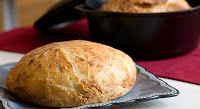
    Success at last!I also tried the Speedy No Knead Bread recipe on Sunday since I had such magnanimous failures with the other ones before. This time I did things a little differently.

    I heated the water to 110 degrees and added the yeast and a pinch of sugar and let it sit for about 5 minutes before I added it to the flour and salt. I then let it proof in a warm area for 5 hours. It rose like crazy. It took the full hour to bake, but it turned out beautifully browned with a crisp crust and a nice, poofy, interior.

    Since y'all were talking up that 5 Minute Bread Recipe, I got that started last night since the other bread I made is mostly gone already. I tinkered with the quantities a bit since they are huge. I cut the recipe down to 2/3 the original and substituted 1 cup of all-purpose flour with whole-wheat and 1/3 cup of all-purpose with medium rye flour.

    It was rising like crazy before it went in the fridge (I actually had to move it to a larger container as it was crawling out of the original one). I'll report back how well that goes. I'm hoping to use this as an all-purpose bread for loaves as well as pizza dough.

    Raspberry jamThat's pretty much it! I also submitted another recipe to Mother Earth News Blogs so when that gets posted, I'll let you know. I'm super excited to share this jam recipe with you as it's my favorite one yet.

    My husband said it tastes like a raspberry jelly donut and, by gum, he is right. There are several (soon-to-be not so secret) ingredients that make it great and I can barely stop congratulating myself for my jambrilliance!

    Monday, October 20, 2008

    Hitch up your wagon for Pioneer Week!

    Pioneer Week: November 3 - 10, 2008Now that I've got a lot of you signed up to Freeze Yer Buns this winter, it's time to gear up for living like Little House on the Prairie.

    That's right folks, enough of you seemed interested, so I'm hosting the first ever Pioneer Week in November. From November 3rd through November 10th, those of you brave enough to participate can look forward to a full week of pioneer fun!

    What exactly does that mean? Well, it means living by a few simple rules:

    1. Food: During Pioneer Week, you must make all your meals from scratch. This isn't really as hard as it sounds particularly since you have a few weeks to prepare. That's right, I'm letting you prepare meals ahead of time to freeze if you won't have time during the work week. But, anything prepared ahead of time must be made from scratch. What kind of things are we talking about?

    Baked items: Yeast and quick breads, pizza dough, crackers, pasta, bagels, tortillas, pretzels, etc.

    Looking for meal suggestions? Here are a few (I'm not expecting you to keep to a pioneer diet, unless you really want to go for it):

    Breakfast: Granola, muesli, oatmeal, yogurt and fruit. Eggs and toast made with homemade bread, butter and jam.

    Lunch: Sandwiches with home ground peanut butter, jam. Homemade mozzarella and the last of this year's tomatoes from the garden.

    Dinner: Soups made with homemade stock, pasta with homemade tomato sauce, chili, stews served with homemade bread.

    Snacks: Yogurt, dried fruits, fruit and vegetables, cookies, homemade ice cream, etc.

    2. Energy usage: Keep your energy usage low by keeping the heat low or off, use only one light in the house at a time (or at least turn off the lights when you are not using them) and line dry your clothes. Since you'll be doing a lot of cooking at home, try to coordinate when you are using the oven to take advantage of baking and/or roasting items at the same time. I don't expect you to unplug your fridge or freezer, so don't worry about that.

    3. Conserve water: Since we don't all lug our water from the stream for home use, we'll have to do a few things to help conserve water. Besides taking shorter showers (5 minutes or less or take a military style shower) and flushing less often, you can create a great reminder about water usage by turning the water off on most of your sinks so when you go to use them nothing comes out.

    Why in the world do this? Well, because it will force you to use the few sinks you do leave on. And of the one(s) you leave on, turn the water down low (via the knobs underneath the sink) so you have little water pressure. It will be hard to have the sink on full blast with little water pressure.

    4. Transportation: Walk as much as possible. This will force you to support more local stores if you can't drive across town. If this isn't feasible, then drive or take public transportation. Most importantly, try to combine trips and if you really don't need to go out, stay home!

    5. Rethink your entertainment: Instead of spending the week passively watching television or movies, try to engage more with the people you live with or neighbors within walking distance. Get the family back into playing games, music or just sitting around talking and telling stories. If you aren't in the mood for socializing try picking up that long lost craft hobby or start a new one.

    6. Watch your wallet: Think of this as a Buy Nothing Week. Since you'll be pretty much eating at home or at home all week, you don't really need to buy anything, now do you?

    As we get closer to Pioneer Week, I'll post suggested activities to get you more into the spirit of things. Some will be fun and games for the kids and others will be activities for adults as well as kids.

    If you have any ideas to share on what you plan on doing or how else to make Pioneer Week a success, leave your tips in the comments section of this post. For those of you who want to totally get into it, feel free to dress up, just try not to alarm the neighbors.

    Now, if you want to participate, just add a comment to this post!

    Sunday, October 19, 2008

    Do you need to try no knead bread?

    No knead breadThe New York Times has been posting recipes for something they call a "no knead" bread where you leave the dough to an extensive rise to avoid having to bother with kneading this homemade bread. Several other publications have picked up on this no knead bread recipe, adding their own spin on it.

    When I first read these recipes, I was quite excited to give it a try since, not only was it easier not having to knead the dough, but since it required a long rise, you could start it at night and bake it in the morning, thus fitting baking bread around a relatively busy schedule without babysitting multiple rises all day long.

    The original No-Knead Bread Recipe was an abject failure around our house. It barely rose and ended up being a flat, hard disk that took forever to bake to get to temperature. It was edible, but certainly not something I wanted to invest the time in repeating. Since then, I've seen other adjustments to the original recipe, but haven't given it a try again.

    When the NYT published an updated recipe a few weeks ago, this time for a Fast No-Knead Whole Wheat Bread, I was excited to give it another try since the recipe was totally different, the rise time was shorter and I prefer whole wheat. Plus, you bake it in a loaf pan and didn't need to mess around with a dutch oven like the original. (They also posted an updated, even faster Speedy No-Knead Bread.)

    I tried baking a loaf of it yesterday, but when I cut and pasted the recipe from the website, Windows mysteriously ejected the salt part of the ingredients list and I ended up with a inedible hockey puck of a bread loaf. It went into the compost. When I was eating it I immediately realized that something was missing: salt. So, when I went back to check on the recipe, lo and behold, there it was. The missing salt. So, I'll have to try it again.

    Have any of you tried making the no knead bread? I hope you are having better luck with it than I.

    Some of you have asked what my favorite homemade bread recipe is. I've posted it over on Crunchy Chicken Cooks, if you'd like to try it out.

    Related posts:
    Make your own yogurt
    Holy cow! I made my own butter

    Saturday, October 18, 2008

    Green Christmas book winner

    Green ChristmasThe winner of the book, Green Christmas, is Katy of What a Great Place to be a Cow.

    So, congratulations to Katy! Please send me your mailing info at crunchychickenblog@gmail.com.

    For those of you who didn't win, here are some holiday party ideas from the book:

    1. Host an organic wine tasting party
    2. Host a local foods party
    3. Host a Christmas book club
    4. Host a holiday card making party

    Here's to everybody having a green Christmas this year!

    Friday, October 17, 2008

    Your favorite green blogs

    When I started writing this blog, it didn't seem like there were nearly as many blogs focusing mostly on the environment, sustainable living and climate change. Since then, tons have started up.

    What I'm referring to are personal blogs, written by one individual (not teams of writers - although many of those have popped up too). It's easy to get stuck in a rut and follow the same blogs and not notice all the other really good ones that are out there, either new or ones that have just not been noticed as much.

    So, what are your top five or so favorite green blogs (with links)? And, again, I'm not talking about sites like Grist or Treehugger. I'm talking about personal sites.

    Thursday, October 16, 2008

    Make your own yogurt

    One thing I don't like about the blog format is that it's difficult to find previously written content. So, I've decided to occasionally re-post a few things from the first couple of months when I started this blog, back when there were, maybe, 35 people who bothered to stop by. Unless you are a die-hard Crunchy reader, it's unlikely that you've read all the way back to the beginning. If you are, well, I love you!

    However, if you want to read some fresh Crunchy writing, mosey on over to Hen & Harvest for my latest post, Saving Scarlet Runner Beans to read about my latest shenanigans.

    Otherwise, on to the yogurt (BTW: I've made a few additions and changes to the original):

    We eat a serious amount of yogurt in this house. Being mostly vegetarian, it's a big source of protein for us. Between the four of us eating almost a serving each per day, it adds up. It comes to probably 20+ containers of yogurt a week. I always joke about the "wall of yogurt" travelling down the conveyor belt at the grocery store. The number of plastic containers going in the recycling was starting to unnerve me, as well as the cost (Brown Cow is not the cheapest brand but I love it).

    Well, inspired by my fabulous sister-in-law, I decided to start making my own yogurt. I've been tinkering with the recipes to get it to a consistency that we like, and I think I've finally figured it out. I started out making plain and strawberry, but now I'm hooked on making coffee yogurt. So, for your reading enjoyment here's how I go about it.

    Little glass jars of yogurt loveFirst of all, you don't really need a yogurt maker, but keeping a steady temperature for 6 - 8 hours is difficult to say the least, and I'm too lazy to watch my yogurt grow all day. After doing some research I decided to go with the Euro Cuisine yogurt maker. It comes with individual glass (reusable!) jars that double as serving containers so you don't need to dig it out of a quart size container. Plus you can mix up different flavors if you want in one batch. I highly recommend it.

    The recipe I've been using for the coffee yogurt is as follows:

    1 quart of whole milk (heat on the stovetop to about 200 degrees F)
    2 T sugar (you can use honey or maple syrup instead)
    2 T instant espresso (I use Medaglia D'Oro)

    Add the goodsMix the above three ingredients together after you take the milk off the stove. When it cools to room temperature (or about 95 degrees F), blend in:

    6 oz plain yogurt (whole, lowfat or nonfat -- depending on how much fat you like)

    This last step is critical. You need a yogurt "starter" to grow more yogurt.

    You can use whatever percentage milkfat you want, we like ours creamy so we go with the whole milk. If you want to go nuts, mix in some half and half or heavy whipping cream. After mixing this all together, pour it into your yogurt maker and, depending on manufacturer's directions, "heat" the yogurt. 8 hours works best in ours.

    So, not only do you have total control over the ingredients, the flavoring and the consistency, it ends up being dirt cheap. Compared to $1.20 for a serving from the store, homemade yogurt ends up being more like $.25 per serving if you use the more expensive, local, organic milk (if you use inexpensive, conventional milk it's more like $.12 per serving).

    And there you have it! Who knew making yogurt was so damn easy?

    Related posts:
    Homemade ricotta
    Do you need to try no knead bread?
    Holy cow! I made my own butter

    Wednesday, October 15, 2008

    Book giveaway - Green Christmas

    Green ChristmasIt's Wednesday. It's debate day. Hey, let's give away a book!

    This little book with the long name, Green Christmas, How to Have a Joyous, Eco-Friendly Holiday Season, stuffs a ton of suggestions on how to have a green Christmas into a small package.

    Frankly, if you have been keeping up on how to green your holidays and paying attention to all the green holiday tips in the media, not much in this book will come as new information to you. But, it's nice to have all of the information distilled down into one reference book.

    If greening your Christmas is new to you, this makes for an excellent resource giving you the scoop on holiday parties, Christmas cards, gift wrap and ye old yule log. It would also make a nice gift to friends and relatives who might need, ahem, a little nudge towards less holiday waste.

    From Amazon:

    As green awareness spreads over middle America, more and more people want to have a fun, environmentally responsible holiday. This book shows how to enjoy the Christmas season while leaving a smaller carbon footprint.

    Readers will learn how to do the following: choose between a real tree and an artificial one; find alternatives to holiday cards; avoid the holiday catalog crunch; find or make gifts that are green or teach green; have warm, cozy green fires; create eco-responsible lighting displays, and more! Readers can have a great holiday celebration—while caring for the planet and setting a great example for generations to come.

    To enter to win this little gem by random drawing, add your name to the comments by Friday, October 17th, 6:00 pm PST. I'll announce the winner on Saturday.

    Good luck!

    Monday, October 13, 2008

    Freeze Yer Buns Challenge 2008

    Freeze Yer Buns Challenge 2008Okay, chickens, I just can't tell you how excited I am to kick off this year's Freeze Yer Buns Challenge. Last year we had such great participation and I'm expecting even more frozen hindquarters this year.

    Because of the economic situation, most everyone is tightening up their purse strings, plus heating costs (oil, natural gas and electricity) are expected to be a lot higher this year than last, so you have even more incentive to hop on board the chapped cheeks express.

    This year, we'll all share hints and tips for keeping the thermostat low without really freezing our buns off. For those of you who use a form of heating without a thermostat, you are still invited to play. The challenge for you is to use less fuel.

    To give you all some additional inspiration, see if you can name the president that made the following speech:

    I again ask every American to lower the thermostat settings in all homes and buildings to no more than 65 degrees during the daytime and to a much lower setting at night...

    ...I must say to you quite frankly that this is not a temporary request for conservation. Our energy problems will not be over next year or the year after. Further sacrifices in addition to lowering thermostats may well be necessary. But I believe this country is tough enough and strong enough to meet that challenge. And I ask all Americans to cooperate in minimizing the adverse effect on the lives of our people.

    I know a lot of you can't commit to those types of temperatures and it's just fine if you pledge to drop it down one degree or so from where you usually keep it. Even that makes a huge difference. You'll find that, as the winter wears on, you'll be able to drop it lower as you adjust to the new, lower temperatures. If you don't want to take the icy plunge, don't feel like you have to drop it 10 degrees right away.

    To sign up for the challenge, add a comment to this post and pledge what temperatures you will keep your thermostat. I'm pledging for 62 day and 55 night. You are more than welcome to meander through the posts from last year's challenge if you want to know what you're in for.

    As I did last year, I will keep a tally of participants (with your high and low numbers) in the right sidebar. Feel free to grab the graphic if you want to promote the challenge on your blog as well.

    This year's challenge mascot is the Arctic fox. Help prevent his extinction by preserving the Arctic environment by using less energy, reducing the amount of CO2 added to the atmosphere and stopping global climate change.

    How low can you go?

    Sunday, October 12, 2008

    Fighting mold and mildew season

    This time of year in the wet Pacific NW becomes a verdant time indoors as well as outdoors. And that means more moisture in the house and mold growth.

    Since we don't have a fan in our bathroom and rely on opening the window, we always have a problem of mold growth on the walls and ceiling where the steam likes to collect and hang out all day, even with the window wide open.

    I've tried a number of desperate measures spreading from toxic (bleach) to inert (vinegar) with varying levels of success. So, let me give you a few suggestions of how to fight mold in your home.

    Bleach solutions - This is probably the most effective way of getting rid of mold for longer periods of time. Unfortunately, the environmental impact of using bleach is high, you have to deal with the fumes and it's possibly dangerous (atomized droplets of bleach landing back on your face as you spray the ceiling, anyone?) and generally toxic.

    Tea tree oil - Although tea tree oil is rather expensive, you are using only a small amount. This is probably your best bet for a natural solution, but the smell is strong and some people have issues with tea tree oil. Mix two teaspoons of tea tree oil in two cups of water and place into a spray bottle. Spray onto moldy areas - do not rinse. This mixture lasts forever.

    White vinegar - Using straight up vinegar (don't even bother diluting it) can be effective in removing mold, but it takes a bit of work and doesn't last very long. The smell isn't so great, although it's much better than bleach, and can sting so be careful if you're doing ceiling spraying. I recommend applying directly with a sponge. That said, this is an inexpensive solution to your mold problems. Used straight up, vinegar purportedly kills 82% of mold. You can always try adding an essential oil like tea tree oil to boost the mold killing.

    Grapefruit seed extract - The one nice thing about this mixture is that it is odorless and a little goes a long way. Mix 20 drops into two cups of water in a spray bottle and get to work. Many people have reported success with using this, although I haven't tried it.

    Lemon juice - Apply full strength with a sponge. The smell by far is better than any other option listed here, but it's only moderately effective. So, if you are short on mold patience and hate redoing your lemon juice application frequently, you might try something else. Like the vinegar, it works for a short period of time.

    Hydrogen peroxide - If you are dealing with mold on tiles, try using one part hydrogen peroxide with two parts water. Spray on and wait an hour.

    Clove oil - Clove oil is anti-bacterial and anti-fungal and supposedly can help remove mold. Add several drops of clove oil (about half a dozen will do) to a half-filled bucket of water and apply with a sponge. Not all of the mold will be removed immediately. It may take a few days to work, and the surfaces should be dusted off after the mold looks dusty.

    Concrobium mold control - This is an off-the-shelf product that contains mostly inorganic compounds that leaves behind an antimicrobial film upon drying that encapsulates fungus microbes and prevents growth. Supposedly, it's inert and the salespeople will drink it to prove how safe it is. This stuff works fairly well and lasts longer than the other options, but mold is mold and it always comes back.

    Other options - It might be better to prevent mold in the first place by providing the right mix of ventilation and dryness. If your mold problems are in the bathroom, installing an exhaust fan should help. You may want to consider getting a dehumidifier if you really have a bad mold problem or using a space heater to heat and dry up trouble spots.

    Friday, October 10, 2008

    Living like Little House on the Prairie

    Modern pioneer houseEmulating life in the late 1800s a la Little House on the Prairie is a lesson in conservation and frugality. Life may have been a whole lot tougher back then, but the end result was living life with less impact on the environment.

    For modern day pioneers, you get the environmental benefits as well as the money saving ones. And, if your financial portfolio is taking a nosedive, consider trying some 19th century ways of life to snap you back into the black.

    1. Grow your own food - Planting your own food crops may take some time to learn how to do properly, but once you get the hang of it, you'll save a ton of money on your food bill. Talk about eating local. For those apartment dwellers out there, you have no excuse. There's a bunch of things you can grow on your windowsills, plus indoor mushroom cultivation and much more (I'll be posting soon about what more you can do in a later post).

    2. Raise your own critters - Whether it be chickens or other poultry for their eggs and meat, bees for honey, rabbits for meat and fur or goats for dairy, wool and meat, many people have plenty of options for animal husbandry.

    3. Make your meals from scratch - Do you think Ma bought dinner at the local fast food joint? I reckon not. Spending the extra effort making your meals from scratch will not only save you money, but will also save your arteries from the salt, fat and cholesterol laden convenience foods we tend to rely on. Take it one step further and make your own yogurt, cereal, butter, tomato sauce, jams, peanut butter, bread, pasta... the list goes on.

    4. Conserve water - Indoor plumbing is a thing of the future and thinking like a pioneer will save you water. If you had to rely on all your daily water by lugging it to the house from the creek, you'd use a heckuva lot less water. So, save your warm up water from the sink and showers for other needs (like flushing the toilet) and be mindful of that running tap water.

    5. Skip the heat - I know not all of you can do this, but even just turning your thermostats down lower, bundling up in sweaters, slippers and blankets will save you tons of money on your winter heating costs. Since the cost of heating oil, electricity and gas are expected to increase at least 10% this winter, think about reducing your thermostats by 10% or more to offset the increase.

    6. Turn off the lights - Concentrate your activities in one main room if possible to reduce the number of lights on in the house. Does your whole family really need one light on (or more) per person? Getting together may also inspire more family interaction. Try telling stories - you'll be surprised at how interested your kids, friends and family are about your childhood. And all that huddling together will reduce your heating costs.

    7. Walk instead of drive - Since most of you don't own a team of horses, walking is your best bet for getting around. Even if you don't live near town, most pioneers didn't either, and walking several miles to town was considered routine. You'll save money on gas and get the extra exercise you probably need.

    8. Rise and set with the sun - Getting up early and going to bed early will not only award you with the much needed sleep that most of us don't get, but it will also save you money on your electricity and heating bills.

    9. Craft your own - Sewing, knitting, quilting, soap-making, wood-working and other crafts are not only great hobbies, but are rewarding and can save you money. Plus, you can give away your hard work as gifts that will be much better appreciated than many store bought items.

    10. Don't buy on credit - As Pa would say, "cash on the barrel head only"! In other words, live within your means and you will not run into financial trouble. By the same token, if you are only spending what you have you'll be less likely to be caught up in wanton consumerism and all the environmental impact it entails. So, stick to buying quality products that you absolutely need and that fit within your budget.

    I don't know about you but I'm feeling a "Pioneer Week" coming on!